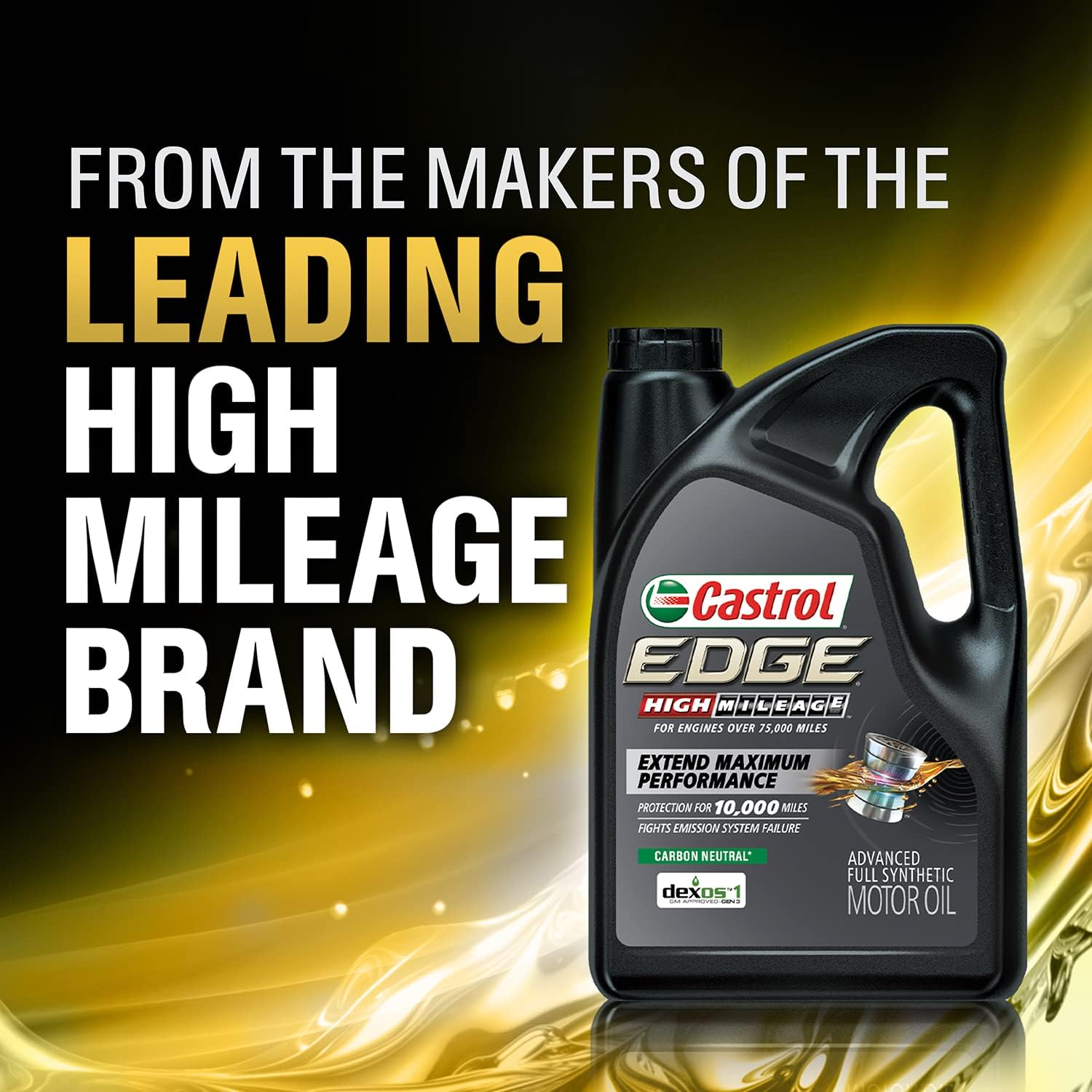
Castrol 5W-40, Castrol Edge 5W-40 and Castrol 0W-20: Differences, Specs and Which One Your Engine Needs
If you’ve ever stood in front of a wall of oil jugs wondering whether Castrol 5W-40, Castrol Edge 5W-40 or Castrol 0W-20 is the right one, you’re in good company. These are three of the most searched Castrol grades, and they are built for very different engines. Grab the wrong one and you can end up with lower fuel economy, a thinner protective film than your engine was designed for, or an oil that doesn’t meet your manufacturer’s spec.
This guide keeps it simple. You’ll learn what the numbers mean, what’s actually in each oil, which engines each one suits, and how to buy Castrol full synthetic motor oil at wholesale prices from Sauto Mobils.
Castrol 5W-40 vs Castrol Edge 5W-40 vs Castrol 0W-20 at a glance
Castrol Edge 5W-40 is the full synthetic 5W-40 in Castrol’s premium Edge line, sold in the U.S. as Castrol EDGE Euro Car 5W-40 A3/B4. It’s built for European cars and engines that run hot or hard.
Castrol 5W-40 and Castrol Edge 5W-40 are effectively the same shelf item for most shoppers. When people search “Castrol 5W-40 synthetic,” this is the oil they’re usually looking for.
Castrol Edge 0W-20 is a full synthetic for modern, fuel-efficient gasoline engines, including many hybrids, that call for a thin oil.
They are not interchangeable. Match the viscosity and the specification in your owner’s manual, not the oil that sounds strongest.
What do 5W-40 and 0W-20 actually mean?
Every motor oil grade has two numbers, and each tells you something different.
The first number and the W. The W stands for winter. It shows how freely the oil flows when cold. A lower number flows faster, so 0W gets to engine parts quicker on a cold start than 5W.
The second number. This is the oil’s thickness at operating temperature. A 40 is notably thicker than a 20 when the engine is hot, which means a stronger protective film under heat and load.
Put simply, 0W-20 is a thin, efficient oil, while 5W-40 is a more robust oil designed for engines that need extra film strength.
Castrol Edge 5W-40: the European-spec full synthetic
Sauto Mobils lists this oil as Castrol EDGE Euro 5W-40 A3/B4, and that name tells you a lot. European automakers write demanding oil specifications that emphasize heat resistance, shear stability and long-life protection, and this oil is built to meet them.
Specs and approvals
According to published product information, the U.S. Castrol EDGE 5W-40 A3/B4 meets API CF/SP and ACEA A3/B4, and carries BMW Longlife-01, Mercedes-Benz MB-Approval 229.5, Porsche A40 and VW 502 00/505 00 approvals. Retail listings also note that it meets the engine test requirements of Chrysler MS 12991 and Renault RN0700/RN0710. You can check the full list of approvals on Castrol’s Edge product page, and always confirm what’s printed on the bottle in front of you.
Who should use Castrol Edge 5W-40?
Owners of BMW, Mercedes-Benz, Volkswagen, Audi and Porsche vehicles whose manuals call for a 5W-40 with these approvals
Drivers of turbocharged and direct-injection engines that make a lot of heat
Anyone in a hot climate, or who tows, hauls or drives hard
Drivers whose manual lists ACEA A3/B4 or a matching manufacturer code
Is Castrol Edge 5W-40 full synthetic?
Yes. It’s a full synthetic oil, which means it resists heat breakdown better and flows more consistently than conventional oil.
Can you use Castrol Edge 5W-40 in a diesel?
It’s rated for use in many light-duty gasoline and diesel engines, but be careful. Diesel and gasoline engines fitted with a particulate filter often require a “low-SAPS” oil (look for ACEA C3 or manufacturer codes like VW 504 00/507 00). A3/B4 is not a low-SAPS spec, so match what your manual requires.
Castrol 5W-40 price and sizes at Sauto Mobils
Castrol Edge Full Synthetic 5W-40, 1 quart: $6.00, great for a top-off
Castrol Edge Full Synthetic 5W-40, 1 liter: $7.00, a size European owners often look for
Castrol Edge Full Synthetic 5W-40, 5 quart: $17.48, roughly $3.50 per quart and enough for most full oil changes
Castrol Edge 0W-20: the modern, efficient full synthetic
Automakers have been steadily switching to thinner oils, because less internal friction means better fuel economy and faster lubrication on a cold start. Castrol 0W-20 is the factory-fill grade in a huge number of modern vehicles, from daily commuters to SUVs and many hybrids.
Specs and approvals
The current U.S. Castrol EDGE 0W-20 meets API SP and ILSAC GF-6, carries GM dexos1 Gen 3 approval, and meets applicable Ford and Chrysler requirements for vehicles specifying a compatible 0W-20. Castrol also lists it as suitable for use in hybrids. Newer bottles may carry the updated API SQ and ILSAC GF-7 labels, so read the label and match it to your manual.
Who should use Castrol Edge 0W-20?
Owners of newer Toyota, Honda, Ford, GM, Hyundai, Kia, Subaru, Nissan, Mazda and similar vehicles whose manuals specify 0W-20
Hybrid owners, as long as the manual calls for 0W-20
Drivers who make lots of short trips or live in cold climates, where fast cold-start flow matters most
Anyone chasing the best fuel economy their engine can deliver
Is Castrol Edge 0W-20 full synthetic?
Yes. It’s an advanced full synthetic motor oil.
Castrol 0W-20 price and sizes at Sauto Mobils
Castrol Edge Full Synthetic 0W-20, 1 quart: $6.00, with a second 1-quart listing at $6.25
Castrol Edge Full Synthetic 0W-20, 5 quart: $17.98, with a second 5-quart listing at $17.48
5W-40 vs 0W-20: how do they really compare?
Hot thickness. 5W-40 holds a thicker film at operating temperature, while 0W-20 runs thinner with less drag.
Fuel economy. 0W-20 generally wins. A 5W-40 can cost you a little efficiency in an engine not designed for it.
Cold starts. 0W flows faster when cold, though 5W-40 still flows well in normal conditions.
Heat and load. 5W-40 is the better match for hot-running, high-output engines that were designed around it.
Engine design. Modern engines built for 0W-20 have tight tolerances and variable valve timing systems tuned to that oil’s flow and pressure.
Can you use 5W-40 instead of 0W-20 (or the other way around)?
This is one of the most common questions, and the answer is: not unless your manual says so.
5W-40 in a 0W-20 engine can raise oil pressure, slow oil delivery to tight clearances, strain variable valve timing and reduce fuel economy. It may also create warranty headaches.
0W-20 in a 5W-40 engine can leave you with a thinner film than the engine was designed to run on, especially under heat and heavy load.
In a true emergency, topping off with a small amount of the other grade won’t destroy anything. Fix it at your next oil change.
Castrol Edge vs Castrol GTX: what’s the difference?
Castrol GTX is the more affordable line, usually conventional or synthetic blend, while Edge is the full synthetic premium line. GTX is a fine choice for simpler engines on normal intervals. Edge is the pick for modern, turbocharged or high-demand engines, or any time your manual calls for full synthetic. If you’re looking for a budget option that’s still a step up from conventional, try Castrol GTX High Mileage Synthetic Blend 5W-30 or 10W-30, both in 5-quart jugs.
How to choose the right Castrol oil in 60 seconds
Open your owner’s manual and find the viscosity grade and any required specs (API, ILSAC, ACEA, dexos, VW, BMW, MB, Ford, Chrysler).
Check the oil filler cap, which often prints the grade.
Match the label. The bottle should list the same spec your manual calls for.
Consider mileage. For older engines whose manual allows it, a high-mileage formula can help with seals, such as Castrol Edge High Mileage Full Synthetic 10W-30.
Still unsure? Sauto Mobils has an engine oil guide to help you narrow it down.
Other Castrol Edge grades if your manual says something different
You can stay in the same product family even if neither 5W-40 nor 0W-20 is your grade:
Castrol Edge 0W-30, 1 quart: $6.00
Castrol Edge 0W-40, 1 quart: $6.00
Castrol Edge 5W-20, 5 quart: $17.98
Castrol Edge 5W-30, 5 quart: $17.98
Castrol Edge 10W-30, 5 quart: $17.48
Castrol Edge 10W-40, 1 quart: $6.25
Castrol Edge 5W-50, 1 quart: $6.00
Castrol Edge 10W-60, 1 quart: $7.00
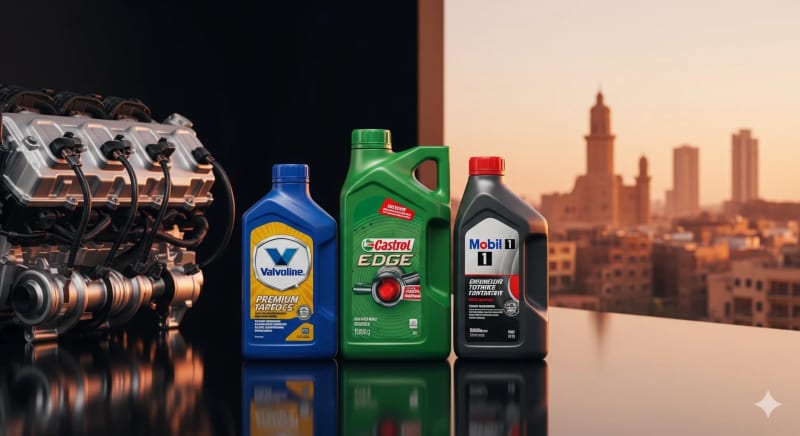
Castrol vs Mobil 1, Pennzoil and Valvoline
Castrol isn’t the only strong choice, and the right spec matters more than the brand name. For comparison shoppers:
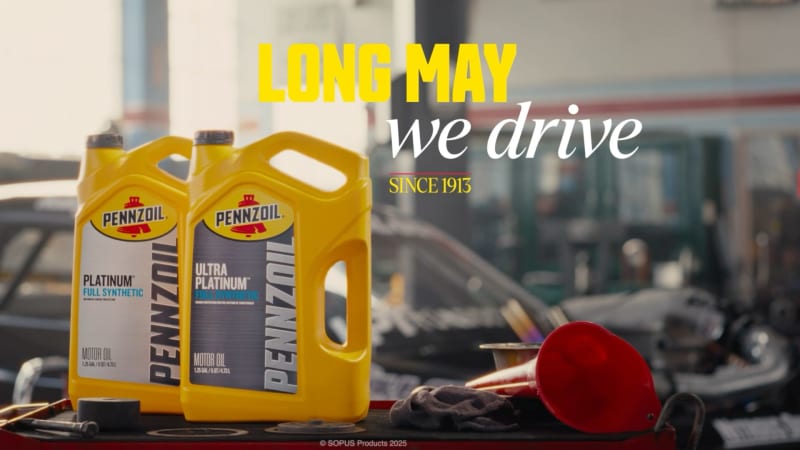
Alternatives to Castrol 5W-40: Pennzoil Platinum Euro Full Synthetic 5W-40 is a European-minded option. For heavy-duty diesel pickups, Shell Rotella T6 Full Synthetic 5W-40 is built for the job, and shops can stock up on Mobil Delvac 1 ESP 5W-40 in a 5-gallon pail.
Alternatives to Castrol 0W-20: Mobil 1 Advanced Fuel Economy 0W-20, Valvoline SynPower 0W-20 and Pennzoil Platinum 0W-20 are all well-regarded.
As long as the grade and certifications match your manual, any reputable full synthetic will protect your engine.
Oil change tips that make any of these oils work better
Follow your interval. Many engines on full synthetic go 5,000 to 10,000 miles between changes, but your manual or oil life monitor has the final say. Towing, short trips and extreme temperatures call for shorter intervals.
Replace the oil filter every time. Fresh oil in a clogged filter doesn’t do much good.
Check the dipstick regularly. Keep a spare quart handy for top-offs.
Know your capacity. Most engines take four to eight quarts, so check your manual before you buy. A 5-quart jug covers many cars, while larger engines need extra quarts.
Never overfill. Too much oil can foam and cause its own problems.
Where to buy Castrol 5W-40 and Castrol 0W-20
Searching for Castrol oil near me or the best place to buy Castrol 5W-40? Sauto Mobils is based in Little Rock, Arkansas, and ships across the U.S. You can browse the full motor oil category or the whole product catalog to compare grades, sizes and brands side by side.
A few things to know before you order:
Minimums. Low-priced items like motor oil carry a $500 minimum cart total, and you can combine different products to reach it. That makes it ideal for shops, fleets and buyers who stock up. The payment and ordering page has the details.
Volume discounts. On the 5-quart Castrol Edge 5W-40, for example, tiered pricing kicks in at larger quantities. Businesses can learn more on the bulk pricing page.
Delivery. Shipping options and timelines are on the shipping and delivery page.
Returns and warranty. The returns and warranty page lays out what to expect before you buy.
Frequently asked questions
What is Castrol Edge 5W-40 used for?
It’s used in European and other performance-oriented gasoline and light-duty diesel engines that call for a 5W-40 with approvals like BMW Longlife-01, MB 229.5, Porsche A40 and VW 502 00/505 00.
Is Castrol 5W-40 the same as Castrol Edge 5W-40?
In most shops the Castrol 5W-40 you’ll find is the Edge full synthetic. Always confirm the exact product and spec on the label.
Is Castrol Edge 5W-40 good for turbo engines?
Yes, if your manual calls for a 5W-40 or the A3/B4 spec. Its heat and shear resistance suits turbocharged engines, but follow the manufacturer’s recommendation first.
Can I use Castrol 5W-40 instead of 5W-30?
Only if your manual allows it. 5W-40 is thicker at operating temperature, which suits some engines and not others.
What’s the difference between 5W-40 and 0W-40?
Both are the same thickness when hot, but 0W-40 flows more easily on a cold start. Make sure your manual lists the grade you buy.
Is Castrol Edge 0W-20 good for hybrids?
Castrol lists it as suitable for hybrids, provided your manual calls for 0W-20.
Is Castrol Edge 0W-20 dexos approved?
The current U.S. formulation carries GM dexos1 Gen 3 approval.
Can I use 0W-20 instead of 5W-20?
Many engines specify one or the other, and some allow either. Check your manual, since using a different grade than specified can affect protection and efficiency.
How often should I change Castrol Edge oil?
Follow your owner’s manual or oil life monitor. Full synthetic often goes 5,000 to 10,000 miles, but severe driving shortens that.
How much does Castrol 5W-40 cost?
At Sauto Mobils, the 5W-40 runs $6.00 per quart, $7.00 per liter, and $17.48 for a 5-quart jug.
The bottom line
If your European car calls for a 5W-40, Castrol Edge 5W-40 is a purpose-built choice. If your modern engine asks for a 0W-20, Castrol Edge 0W-20 is the match. Don’t swap them on a hunch. Read the manual, match the spec on the label, and shop the full motor oil category to find the grade and size that fits your engine and your budget.