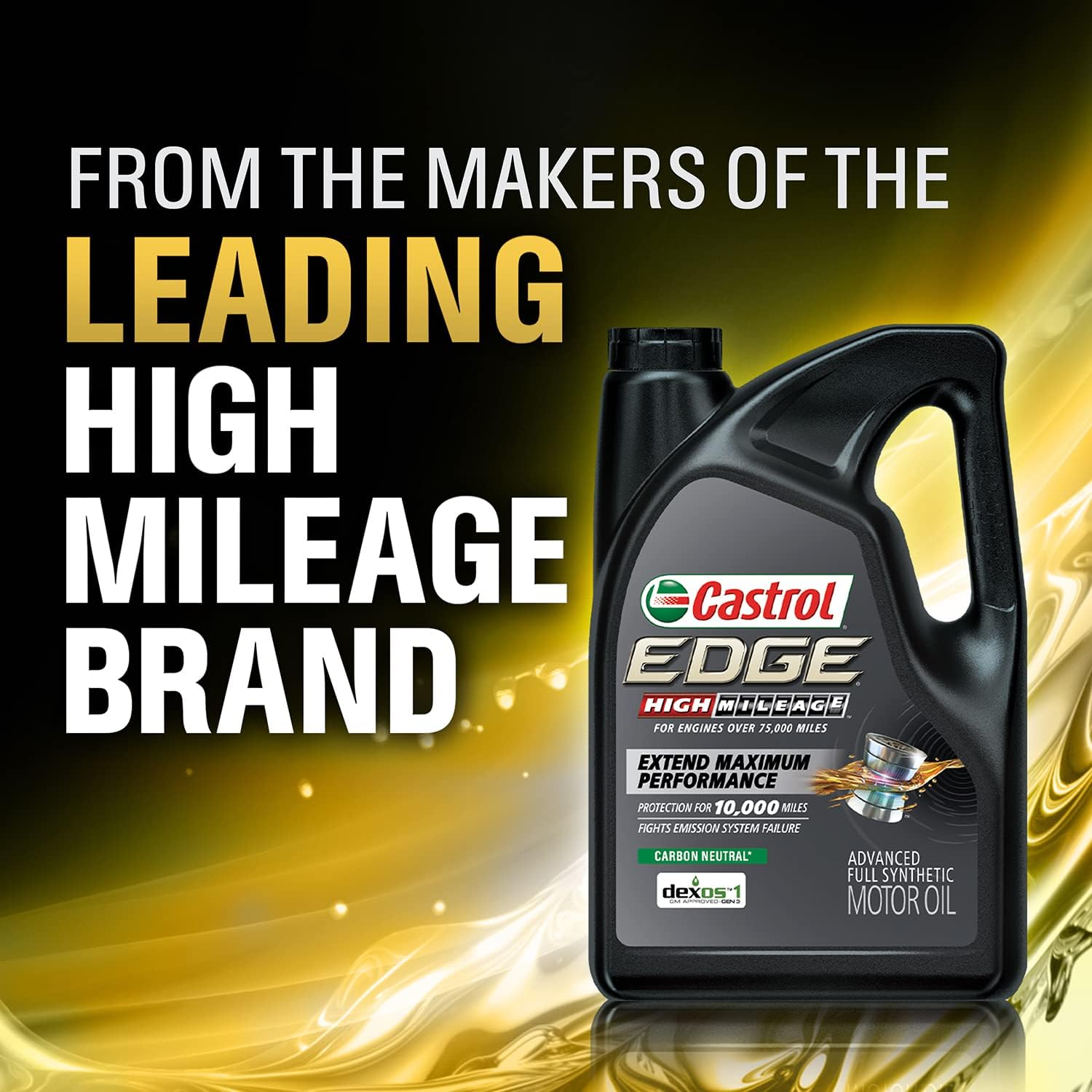
Find the Right Motor Oil at Sauto Mobils: 0W-16, 0W-20, 0W-8 and 5W-40 Explained
OEM Adjustments and the Evolution of Low-Viscosity Oils
How modern engine design, constrained lubricant supply and changing service guidance are reshaping automotive maintenance—and how Sauto Mobils is organized to help buyers source fluids and plan purchases.
Modern engines are designed around carefully specified lubricants. As automakers have adopted oils such as 0W-20, 0W-16 and, in some applications, 0W-8, the benefits have included reduced internal friction and support for fuel-economy goals. But that progress has also made the service industry more dependent on particular grades, formulations and supply chains.
In 2026, reports of supply pressure and temporary dealer guidance have brought this issue into sharper focus. For repair shops, dealerships, fleet managers and drivers, the lesson is not that one oil grade can freely replace another. It is that lubricant planning, accurate vehicle-specific recommendations and clear communication matter more than ever.
Keeping a vehicle in good condition takes more than occasional repairs. It depends on the right fluids, dependable parts and a supplier that makes routine maintenance easier to plan. Sauto Mobils brings automotive products together in one online store, helping individual vehicle owners, repair professionals and fleet managers find products for a range of maintenance needs.
From motor oil and transmission fluid to brake fluid, antifreeze and engines, Sauto Mobils offers dedicated product categories designed to make browsing more straightforward. Whether you’re preparing for scheduled service or sourcing supplies for ongoing work, the site gives you a place to explore products and review practical ordering information.
Choosing motor oil can feel complicated when the shelf is full of different viscosity grades and brand names. Should you look for 0W-16 synthetic oil, Mobil 1 0W-20, Castrol 5W-40, or another formula? The answer depends on your vehicle—not simply on the brand, oil type or the newest grade on the market.
At Sauto Mobils, customers can browse automotive products by category, including the motor oil selection. This guide explains what common grades such as 0W-16, 0W-20 full synthetic oil, 0W-8 full synthetic oil and 5W-40 Castrol mean, and how to approach choosing oil for an individual vehicle or a business fleet.
What motor oil viscosity grades mean
A viscosity grade describes how an oil behaves under standardized temperature conditions. In a multigrade oil such as 0W-20, the “W” refers to winter performance. The first number relates to cold-temperature behavior, while the second number identifies the oil’s viscosity class at operating temperature.
That information is useful, but it isn’t the whole specification. Vehicle manufacturers may also require a particular performance category, industry certification or manufacturer standard. Always check the owner’s manual, oil filler cap and service documentation for the exact requirements for your vehicle’s model year, engine and market.
A reliable selection process means checking all of the following:
Viscosity grade: such as 0W-16, 0W-20 or 5W-40.
Performance specification: the API, ILSAC, ACEA or other standard listed by the manufacturer.
Vehicle fit: the requirements for the particular engine and model year.
One grade is not automatically suitable for every vehicle, and synthetic oil is not a substitute for meeting the required specification.
0W-16 synthetic oil: an increasingly common low-viscosity grade
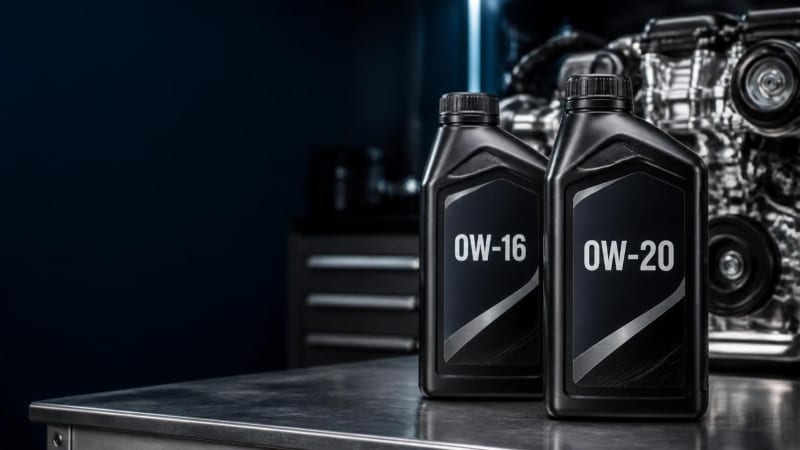
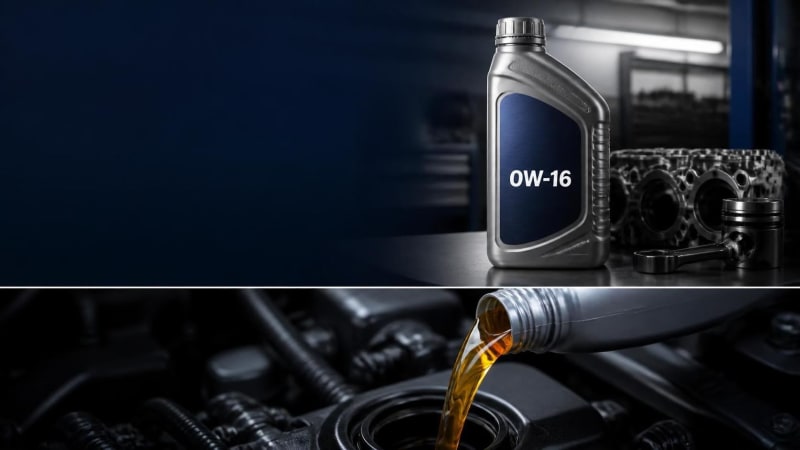
0W-16 synthetic oil is specified for some modern engines designed to use a low-viscosity lubricant. In an engine engineered for this grade, oil viscosity is one part of a larger system of clearances, oil flow, pump design and efficiency targets.
Drivers searching for 0W-16 full synthetic oil should check the vehicle manual before buying. If the manual specifies 0W-16, use a product that also meets the required performance standard. Don’t assume that a different grade is appropriate just because it is more readily available.
In some vehicle-specific situations, a manufacturer may permit an alternate grade temporarily when the recommended oil cannot be obtained. Such permission must be confirmed in the exact manual or current manufacturer service information; it should not be treated as a general rule. For some Toyota applications, technical guidance has described 0W-20 as a temporary substitute when 0W-16 is unavailable, with a return to 0W-16 at the following oil change. Always verify the wording for the specific vehicle.
0W-8 full synthetic oil: a specialized specification
0W-8 full synthetic oil is an ultra-low-viscosity grade intended for specific engines designed around its characteristics. Its presence in the market reflects automakers’ efforts to reduce friction and support fuel-efficiency objectives, but that does not make it a universal replacement for 0W-16 or 0W-20.
A vehicle must be approved for 0W-8 by its manufacturer. If you can’t find the recommended grade, check the manual or contact an authorized service provider for official guidance. Don’t choose 0W-8 based on a general claim that thinner oil always improves fuel economy—using an unsuitable grade may fail to meet the engine’s lubrication requirements.
For repair shops and fleet operators, specialized grades also make inventory planning important. Tracking which vehicles require which grade can reduce last-minute substitutions and help ensure the product used is appropriate for the engine.
0W-20 full synthetic oil and Mobil 1 0W-20
0W-20 full synthetic oil is widely used in vehicles whose manufacturers specify it. The grade is designed to provide the required cold-start performance and operating-temperature viscosity for those applications. As with any oil, the important question isn’t just whether the container says “full synthetic” or “0W-20”; it’s whether the product meets every requirement listed for the vehicle.
People searching for Mobil 1 0W-20 are often looking for a particular brand and viscosity combination. Before purchasing, compare the product label with the owner’s manual—noting both the grade and required performance specification. The same check applies to Castrol 0W-20: brand and grade alone do not establish suitability for every engine.
When shopping online, begin with the Sauto Mobils motor oil category and review product details. Confirm current product availability and specifications before placing an order. A category page can help you browse; the manual remains the reference for what your vehicle requires.
Castrol 5W-40: match the oil to the application
Searches for Castrol 5W-40 and 5W-40 Castrol often reflect a need for a particular brand and grade. Castrol describes its 5W-40 products as full synthetic motor oils, but product formulations and approvals can differ. The appropriate choice depends on the exact engine and the approvals the vehicle manufacturer specifies. castrol.com
A 5W-40 oil is not automatically “better protection” for a vehicle that calls for 0W-16 or 0W-20. Nor should a low-viscosity oil be used in an engine that specifies a different grade. Follow the vehicle-specific requirements rather than choosing based on assumptions about climate, age, driving style or brand reputation.
Why low-viscosity oils matter in modern engines
Automakers design engines to meet multiple goals, including durability, fuel economy, emissions performance and reliable operation across a range of conditions. Lower-viscosity oils can reduce some internal friction and are used in engines designed for them. Synthetic formulations are engineered to meet performance requirements across cold starts and operating temperatures, but they still need to match the application.
The key is engine-specific lubrication. Two vehicles from the same manufacturer—or even two versions of the same model—may have different engine and oil requirements. A grade that is appropriate for one may not be approved for another.
This is especially important for hybrid vehicles, turbocharged engines and newer engine designs. Their maintenance requirements should be checked in the manufacturer’s documentation, rather than inferred from a similar vehicle or a general online recommendation.
Why oil shortages affect the service lane
Oil availability depends on more than the crude-oil market. Base-oil production, refining inputs, additives, blending capacity, packaging and distribution all influence whether a finished lubricant is available in the right grade and specification. Reporting on the 2026 market has described supply pressure reaching both automaker dealer networks and retail channels, although the exact scale and duration of disruptions can vary by grade, supplier and location.
For automotive businesses, the practical effects can include:
Uncertain replenishment: a shop may not be able to count on its usual grade arriving on its usual schedule.
More complex inventory: carrying multiple grades and specifications takes space and working capital.
Scheduling pressure: a missing lubricant can delay a job, disrupt a maintenance plan or require a customer conversation.
Cost volatility: procurement costs may change, complicating service estimates and fleet budgets.
Greater risk of incorrect substitutions: pressure to keep work moving can encourage guesswork unless staff follow OEM documentation and product specifications.
These problems are especially challenging for businesses that service mixed fleets. The shop may need different oils for vehicles that look similar but have different engines, model years or manufacturer requirements.
Smarter lubrication means matching the specification—not guessing!
A heavier oil is not automatically safer, and a thinner oil is not automatically more advanced for every application. The appropriate grade depends on the engine’s design, operating conditions and manufacturer instructions. The API’s consumer guidance likewise directs motorists to consult the owner’s manual when selecting motor oil and to match the required viscosity and performance category.
Before ordering or authorizing a substitute, a shop or vehicle owner should:
Check the owner’s manual and current OEM service information for the exact vehicle and engine.
Confirm both the SAE viscosity grade and the required performance specification.
Use a substitute only when the manufacturer explicitly allows it for that application.
Record the grade, product, date and reason for any approved temporary substitution.
Plan the return to the specified oil at the next interval if the OEM guidance requires it.
Avoid extending an oil-change interval simply because the correct product is difficult to source.
These steps help protect the engine and make service records clearer for customers, warranty administration and future maintenance.
How Sauto Mobils is set up to support maintenance planning
Sauto Mobils presents a broad catalog for automotive maintenance and repair, with product browsing organized around product listings and fluid categories. Its products page provides a starting point for browsing, while dedicated sections make it easier to focus on specific needs:
Motor oil for engine lubrication products.
Transmission fluid for transmission-service needs.
Brake fluid for brake-system maintenance.
Antifreeze for cooling-system service.
Engines for engine-related product browsing.
A focused category structure can help buyers compare available options and build a maintenance order across more than one fluid type. But product availability and suitability are separate questions: buyers should confirm the exact oil grade and required approvals against the vehicle’s documentation before purchase. A catalog listing is not a substitute for OEM fitment guidance.
For businesses managing regular service demand, purchasing systems matter too. Sauto Mobils provides information about bulk pricing, including business-oriented volume purchasing. That can support a more deliberate replenishment strategy: track consumption by grade, review lead times, and plan orders around actual service demand rather than waiting until a shelf is empty. Bulk purchasing can help with planning, but it should not become indiscriminate stockpiling or encourage the wrong grade to be used simply because it is available.
The site also provides practical information for buyers before checkout: payment information, shipping and delivery, and returns and warranty. For a shop, knowing payment and delivery terms—and understanding the process for returns or warranty questions—helps make procurement decisions more predictable.
A practical B2B response to fluid uncertainty
A resilient service operation does not rely on one last-minute order or an improvised oil substitution. It connects purchasing with the vehicles actually in its service mix. A simple approach can help:
Keep a vehicle list that records engine, model year, required viscosity and applicable oil specification.
Monitor usage by grade so purchasing decisions reflect real demand.
Set reorder points for frequently used products and revisit them when supplier lead times change.
Communicate with customers when an OEM-approved temporary procedure affects the service.
Keep invoices and service records that identify the product and grade installed.
Review other fluid needs together when scheduling work, while still matching each fluid to the manufacturer’s requirement.
This kind of process helps independent repair shops, dealerships and fleet operators reduce surprises without treating every reported shortage as a reason to switch products.
The road ahead for low-viscosity oils
The development of 0W-20, 0W-16 and 0W-8 reflects a broader engineering direction: optimize lubrication for a particular engine while meeting durability, efficiency and emissions objectives. The supply challenges reported in 2026 reveal the other side of that progress. More specialized products can make procurement more sensitive to disruptions in raw materials, refining and distribution.
For drivers, the best protection remains straightforward: follow the owner’s manual and current manufacturer guidance. For businesses, it is to combine accurate specification control with thoughtful inventory planning. Sauto Mobils’ catalog categories, business purchasing information and ordering support provide tools for that broader maintenance process—while the final oil choice must always be made for the vehicle and OEM specification at hand.
Choosing the right oil: a simple checklist
Before you buy 0W-16 synthetic oil, 0W-8 full synthetic oil, Mobil 1 0W-20, Castrol 0W-20 or Castrol 5W-40, follow this checklist:
Find the owner’s manual for the exact vehicle and engine.
Confirm the required viscosity grade.
Check the required API, ILSAC, ACEA or manufacturer specification.
Compare those requirements with the product label and product information.
Follow any vehicle-specific instructions about approved temporary alternatives.
Keep your purchase and service records.
Shop motor oil with the vehicle in mind
Whether you’re comparing 0W-16 full synthetic oil, 0W-20 full synthetic oil, 0W-8 full synthetic oil, Mobil 1 0W-20, Castrol 0W-20 or 5W-40 Castrol, the right choice starts with your vehicle’s requirements. Make the manual and manufacturer specifications your guide, then browse the relevant products at Sauto Mobils.
With clear product categories and ordering information, Sauto Mobils helps make automotive maintenance shopping more organized for vehicle owners, repair professionals and fleet buyers.