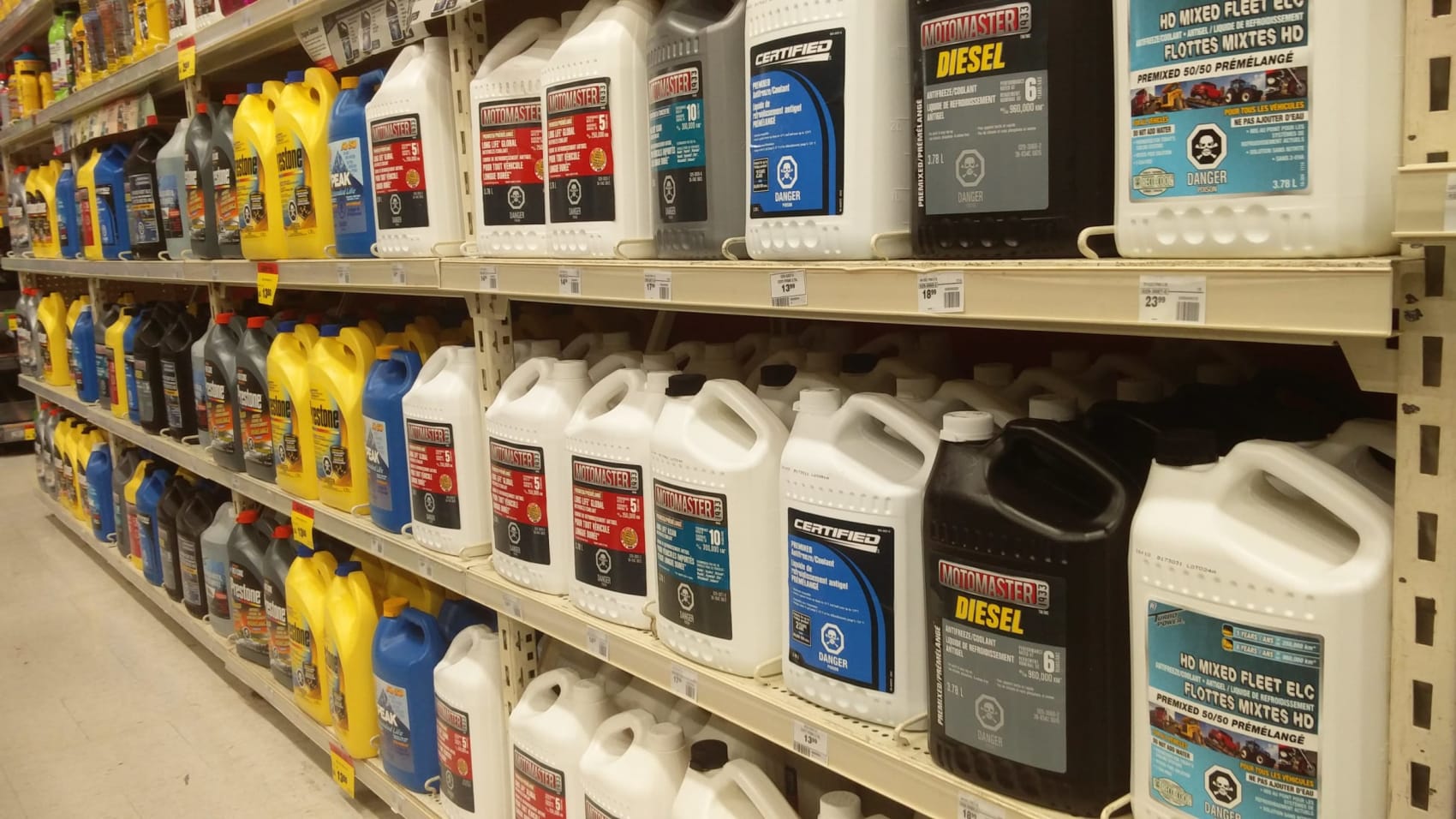
Buy Antifreeze and Engine Coolant at Wholesale Prices: The Sauto Mobils Guide
Nobody wakes up excited about engine coolant. It sits in a plastic reservoir doing its quiet job until the temperature needle climbs, and then it becomes the only thing in the world you care about.
That is exactly why it deserves a little attention now. Good antifreeze costs very little compared with a warped cylinder head, and buying it well, in the right type, at the right price and in the right quantity, takes a bit of know-how. This guide covers that know-how and shows why Sauto Mobils has become a practical source of coolant for sale to everyday drivers, home mechanics, workshops and fleets.
What Engine Coolant Actually Does
Think of engine coolant as your engine’s climate control. Your engine produces enormous heat, and coolant circulates through the block, heads, radiator and heater core to carry that heat away. In winter it stops the liquid from freezing and cracking metal. In summer it raises the boiling point so the system doesn’t boil over.
You will see the terms antifreeze, antifreeze coolant, car coolant and automotive coolant used almost interchangeably. Strictly speaking, antifreeze is the glycol-based concentrate, and coolant is what you get once it is mixed with water. In practice, shoppers and even professionals use the words for the same thing, so don’t let the labels confuse you.
Beyond temperature control, modern coolant also contains corrosion inhibitors that protect aluminum, iron, rubber seals and the water pump. That chemistry is why the right fluid matters so much, and it brings us to the next topic.
Coolant Types and Antifreeze Types: IAT, OAT and HOAT Explained
Not all antifreeze is the same, and the difference lies in the corrosion-inhibitor package. The three main coolant types are:
IAT (Inorganic Additive Technology) is the traditional formula, usually associated with bright green and with older vehicles. NAPA notes that IAT is good for roughly 30,000 miles before it turns too acidic and needs to be replaced.
OAT (Organic Acid Technology) is a longer-life chemistry. Most OAT coolants are free of silicates and phosphates, which is part of why they shouldn’t be mixed with traditional IAT. You will often see the term extended life coolant used for OAT and its relatives.
HOAT (Hybrid Organic Acid Technology) blends OAT and IAT characteristics. HOAT typically lasts around 5 years or 100,000 miles, and it is common in European and many Asian vehicles. valvolineglobal
Don’t trust the color
Here is the part that surprises people: color does not tell you the chemistry. NAPA’s guidance is to never rely on color alone, because dyes are not standardized across the industry. A pink coolant from one brand can be a different technology from a pink one made by another. Color is a handy hint, and the spec printed on the label is the truth. napaonline
What Coolant Does My Car Take? (And What’s the Best Coolant for My Car?)
This is the question we hear most, and the answer is refreshingly simple: your owner’s manual decides. It lists the coolant specification your cooling system was designed around. The best coolant for your car is the one that meets that spec, in the right dilution, from a supplier you trust.
A quick routine to get it right:
Open the manual and find the cooling system section for the required specification or manufacturer standard.
Match that spec to the wording on the bottle label. Look for the manufacturer standard, not just a color.
If the manual lists a brand-specific fluid, such as a GM, Ford or European-maker spec, buy a product that explicitly states it meets that standard.
When in doubt, call the support team before you pour. A two-minute conversation is cheaper than a flush and refill.
Coolant compatibility and “universal” claims
You will see “universal” coolants advertised, and they can be convenient. The industry has a real tension here, though. One trade publication points out that a single formula cannot satisfy the conflicting OEM specifications for IAT, OAT and HOAT, and that a silicate-containing universal coolant won’t meet the OEM OAT spec. If your vehicle is under warranty, stick to the specification your manufacturer lists. counterman
Can you mix antifreeze?
It depends on what you mean. Mixing concentrate with distilled water is exactly how it is meant to be used. Mixing different chemistries is where trouble starts. Combining a green IAT coolant with an orange OAT coolant, for example, can form a brown gel-like sludge that blocks the system over time. Valvoline’s guide, Mixing Coolants: The Ultimate Guide to Antifreeze Compatibility, is a good deeper read. The safe rule is to top off with the same type that is already in the system, and to do a proper flush when changing types. NAPA cautions that a simple flush isn’t enough to swap one type for another, so don’t take a changeover into your own hands.
50/50 Coolant vs Concentrated Antifreeze: Which Should You Buy?
This choice affects both convenience and antifreeze price, so it is worth a moment.
Premixed coolant (50/50 coolant) is ready to pour. It is already diluted with the right amount of water, so there is no measuring and no risk of getting the ratio wrong. It is perfect for topping off and quick fills. A 50/50 blend with an ethylene glycol base protects down to roughly the minus-30s Fahrenheit, though the label for your product has the exact figure.
Concentrated antifreeze is undiluted. You mix it with distilled water, usually 50/50 unless the label or climate says otherwise. One coolant gallon of concentrate makes two gallons of finished coolant, which is why concentrate usually wins on cost per gallon.
Here is the quick math with real listings. A gallon of Prestone yellow concentrate at $8.99, mixed with a gallon of distilled water, makes two gallons of finished coolant, or roughly $4.50 per gallon before the cost of the water. A gallon of Prestone yellow 50/50 is $7.00. A Peak yellow concentrate at $8.49 works out to about $4.25 per finished gallon against $7.00 for the premix. If you service several cars, concentrate is where the savings add up. If you only need a bottle for a quick top-off, premixed convenience is worth it. And whatever you do, use distilled water for mixing, because the minerals in tap water can leave deposits in the system.
Why Buy Antifreeze from Sauto Mobils?
A fair question. Coolant is available almost everywhere, so what makes this a smart place to shop? Here is the case.
1. A shelf that actually covers every kind of car
Most stores stock a handful of jugs. Sauto Mobils lists 40 antifreeze and coolant products from Peak, Prestone, Zerex, Motorcraft, Pentosin and Final Charge, covering yellow, amber, green, orange, red, pink, purple, violet and blue formulas in both premixed and concentrated form. That breadth means you are far more likely to find the specification your car needs without settling for “close enough.” You can browse the full lineup in the antifreeze category or filter across the whole product catalog.
2. Wholesale-style pricing
Prices are what you expect from a distributor. Many gallons are priced in the single digits, and the listings span everything from budget daily-driver jugs to OEM-branded fluids. Businesses can go further: Sauto Mobils publishes a bulk pricing program for workshops, fleets and resellers. It lists antifreeze in 55-gallon drums among the categories with volume discounts, along with tiered pricing for qualifying business accounts. The bulk tiers require a business account and carry minimums, so read the page and ask the sales team how they apply to your order.
3. A true bulk antifreeze option
If you run a shop, a fleet or a busy home garage, the Motorcraft 55-gallon drum shows what “bulk antifreeze” looks like in practice. At $542.00 for 55 gallons of finished 50/50, that works out to under $10 per gallon in a single purchase, with no jugs to haul and far less plastic to throw away. It is a heavy item, so the shipping page notes that items over 100 pounds are quoted individually. Contact the team for a freight quote before you order.
4. Clear ordering rules
Wholesale buying works best when the terms are plain. The payment and ordering information page explains that low-priced items, which includes products like antifreeze, require a $500 minimum cart total. It also suggests combining products such as motor oil, transmission fluid and brake fluid to reach it. That is good news if you stock a garage: you can plan one order across motor oil, transmission fluid, brake fluid and coolant rather than placing four separate small orders.
4. Shipping you can plan around
The shipping and delivery page lays out the options: standard ground shipping in 3 to 7 business days, express shipping in 1 to 3 business days, tracking numbers within one business day, and free standard shipping on qualifying orders over $50. For coolant near me shoppers in the Little Rock, Arkansas area, free same-day local pickup is available for orders placed before 2 PM. Coolant is not a product you want to run out of mid-job, so reliable delivery matters.
5. Returns and warranty in writing
Buying fluids online raises a fair worry: what if it’s the wrong one? The returns and warranty policy describes a 30-day return window for most items that are unused and in original packaging, with proof of purchase and a return authorization number. Defective products get priority handling, and the company covers shipping on defective returns.
6. Real people, not just a checkout button
The site lists phone, email and WhatsApp contact options, and the team can help you confirm a specification before you buy. For a product where “almost right” can cause real problems, that conversation is a genuine benefit.
A Guided Tour of the Shelf: Matching Listings to Real Cars
To make the catalog less overwhelming, here is how the antifreeze listings break down by use. Prices are as listed at the time of writing, and some products appear twice at different prices, so compare listings before you buy.
Everyday premixed jugs for daily drivers
If you want ready-to-pour 50/50 coolant for a commuter car, start here. Peak’s yellow formula is available as Peak 1 Gallon Yellow 50/50 at $7.00, with a second listing at $6.00. There is also the Peak 1 Gallon Amber 50/50 at $8.99. Prestone offers Yellow 50/50 Antifreeze/Coolant and a matching Antifreeze & Coolant listing, both at $7.00, plus Prestone Purple 50/50 at $7.00. Zerex rounds out the group with Yellow 50/50 at $9.99, Purple 50/50 at $9.99, and classic green in two listings: Zerex Green 50/50 at $11.49 and another at $5.50.
Concentrates for stretching your budget
This is where the cost-per-gallon math pays off. The yellow concentrates include Peak Yellow Concentrate at $8.49, Prestone Yellow Concentrate at $8.99, and Zerex Yellow Concentrate at $11.49. Peak also lists Amber Concentrate at $10.99 and Green Concentrate at $14.99. For vehicles that call for blue, pink or violet formulas, there are Zerex Blue Concentrate (also listed here) and Zerex Pink/Purple Concentrate, each at $11.49. Pentosin’s Pentofrost line, popular with European-car owners, comes in 1.5-liter bottles: Blue at $9.99, Violet at $10.99 and Pink at $11.49. Check the spec code on the label against your manual, since European makers are particular. Finally, Final Charge offers Red Concentrate at $14.99, with a second listing at the same price.
Orange extended life coolant for GM-style systems
Orange formulas are often associated with GM’s DEX-COOL specification and with extended life coolant in general. The Prestone Orange 50/50 DEX-COOL at $9.49 is ready to pour, the PEAK Orange Concentrate DEX-COOL at $9.99 is the budget-stretching option, and the Zerex Orange 50/50 at $10.99 is another choice. As always, verify that the label states the specification your manual lists.
Motorcraft for Ford owners
Drivers who like to match factory fluid will appreciate the OEM-branded options. Motorcraft Yellow 50/50 is $16.50 per gallon, the Specialty Orange Concentrate Coolant Revitalizer is $17.00 per quart (check the label for exactly which Ford systems it is intended for), and the 55-gallon drum at $542.00 suits shops that service many Fords.
Blue, pink, red and specialty formulas
Some vehicles call for formulas outside the common yellow and green. Zerex offers Blue 50/50 (with a duplicate listing), Pink/Purple 50/50 and Red 50/50, the last also appearing at $11.49, all at about $9.99 to $11.49. Final Charge adds Red 50/50 at $11.99 and a second listing at $11.49. There is also a Final Charge Red Antifreeze/Coolant Converter at $32.00, so read its label for exactly which systems and coolants it applies to.
Fleet and electric vehicle coolants
Fleets and newer vehicles have their own needs. The PEAK Fleet Charge Pink 50/50 is $9.99, and there is a Fleet Charge Pink Concentrate at $11.49. For electrified vehicles, the PEAK Electric Vehicle Blue 50/50 at $11.49 is formulated for EV thermal systems. Always confirm the exact spec in your manual, because EV cooling loops can have unusual requirements.
Coolant Maintenance Made Simple
Buying the right fluid is half the story. The other half is knowing when and how to use it.
When to change coolant
Intervals vary a lot. Older IAT fluids may need replacing around every two to three years or roughly 30,000 to 60,000 miles, while extended life formulas can last much longer, often five years or about 100,000 to 150,000 miles. Your manual has the real number for your car. A coolant flush at the right interval is cheap insurance.
How to check coolant level
Do it with the engine cold. Never open a hot radiator cap, because pressurized coolant can cause serious burns.
Look at the translucent overflow reservoir and confirm the level sits between the MIN and MAX marks.
If you need to top off, use the same type of coolant already in the system, or a pre-mixed 50/50.
Check the color and clarity. Rusty, murky or oily coolant is a sign it’s time for service.
Can you use water instead of coolant?
In a genuine emergency, a little water will get you to a repair shop, and distilled is the better choice. But it is a stopgap, not a plan. Plain water boils sooner, freezes at 32°F, and carries none of the corrosion inhibitors that protect aluminum, seals and the water pump. If you’ve had to add water, get the system tested and refilled with the correct mixture as soon as you can.
Spotting trouble: coolant leak, low coolant symptoms and overheating
Learn these early warnings, because cooling problems escalate quickly:
Low coolant symptoms include a rising temperature gauge, a heater that blows cold air, and a sweet smell from the engine bay.
A coolant leak often shows up as colored puddles under the car or crusty residue around hoses, the radiator or the water pump.
A lit coolant warning light means stop and check. Don’t drive on it hoping it goes away.
Engine overheating is the big one. If your gauge spikes, pull over safely, shut the engine off and let it cool before you investigate. Continuing to drive can warp heads and blow head gaskets.
Handle Antifreeze Responsibly
Coolant is toxic, and its sweet taste makes it a hazard to pets and children. Antifreeze is toxic because of its glycol content, and ethylene glycol in particular can damage the brain, liver, lungs and kidneys if swallowed. Propylene glycol formulations are less toxic but still need careful handling. Wipe up spills right away, store jugs out of reach and keep them tightly capped. NAPA’s guide on how to dispose of antifreeze safely covers the right way to get rid of old fluid, and Earth911 can help you find a nearby drop-off. Never pour used coolant down a drain or onto the ground. napaonline
Ready to Buy Antifreeze? Here’s Your Simple Plan
Choosing coolant doesn’t have to be stressful. Follow these steps:
Check your owner’s manual for the required coolant specification.
Decide between premixed convenience and concentrate savings.
Match the label spec to your manual, not just the color.
Browse the antifreeze and coolant category, or search the full product catalog.
If you run a shop or fleet, review the bulk pricing program and ask about drum quantities.
Check the shipping options and the returns and warranty terms before you order.
A well-chosen coolant protects one of the most expensive parts of your car for pennies per mile. Pick the right one, change it on schedule, and your engine will thank you every summer and winter.
Sources and further reading